
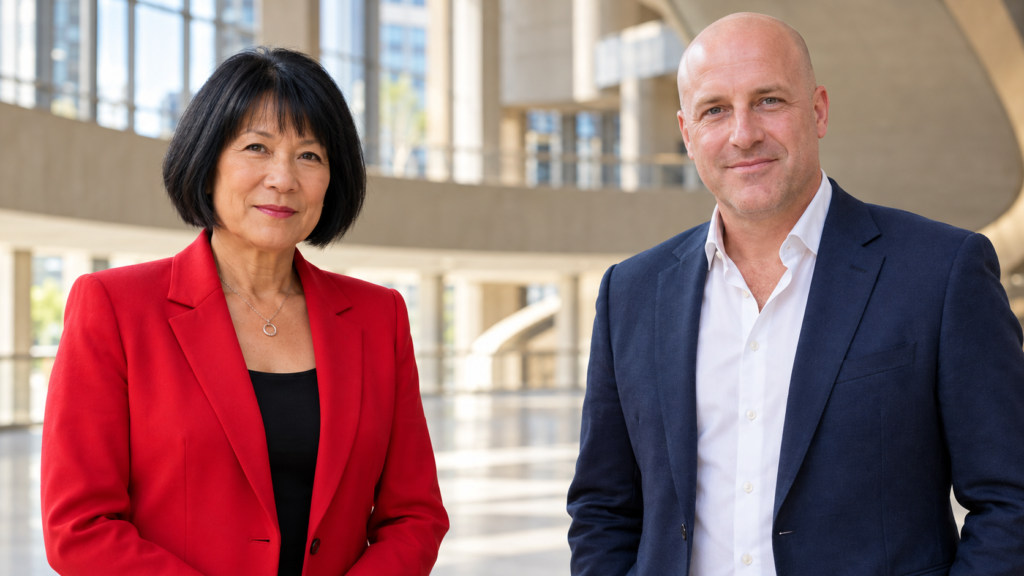
The Toronto municipal election on October 26 is a four-year choice about what it costs to buy in this city and what gets built afterward. Fifty-three names are on the mayoral ballot. The two with housing platforms that would change the next four years are Mayor Olivia Chow and Councillor Brad Bradford.
The platforms are not similar. One candidate would keep the municipal land transfer tax and keep the city in the business of building rent-controlled homes. The other would cut that tax for people buying a home to live in, and he has built his record on making private construction cheaper and faster.
None of it is law on election night. It is the agenda for the term that runs from November 15, 2026 to November 14, 2030. If you own, buy, or sell in Toronto, the difference shows up in the cash you need to close and in the kind of housing that gets added.
What the Toronto municipal election would change in land transfer tax
Toronto is the only city in Ontario with its own land transfer tax, on top of the provincial one. CBC reported on September 29 that the tax is worth roughly $850 million a year to the city, using the 2026 budget. Bradford’s campaign would scrap the municipal portion entirely on homes that sell for $1.1 million or less, when the buyer is purchasing a principal residence. On a home above $1.1 million, his campaign said the buyer would pay the municipal tax only on the value above that line. He put the saving at as much as $18,000, and the cost to the city at about $300 million a year, roughly 35 per cent of the tax.
The cut is not for everyone. His campaign said it applies if you are a first-time buyer or you are selling a home to buy the next one. Investors and landlords who own more than one Toronto property would still pay the full municipal tax. The campaign said that group is 29 per cent of purchases. The provincial land transfer tax is untouched either way. CBC reported the proposal on September 29, 2026.
That cut is not on the books. His campaign said that if council passes it, principal-residence purchases from September 29 through election day would be included. A closing this month is still billed under today’s bylaw.
Chow is not offering to repeal the tax. Her campaign told CBC the plan takes $300 million out of the city with no way to pay for it. The higher municipal rates on homes above $3 million are already in force, from April 1, 2026. I laid those tiers out in the mansion tax note. One Toronto municipal election result leaves that bill where it is. The other, if council passes it, is a tax cut for owner-occupiers and no relief for a second property.
He has also pledged a one-year property tax freeze. That is a carrying-cost promise for a single budget, not a four-year cap. It does not change the land transfer tax.
What gets built if each of them wins
The tax is the cash on closing. The rest of the term is about supply, and the two plans do not build the same thing.
Chow’s platform says 15,000 city-supported units are under construction, that she would get shovels in the ground on 10,000 more next year, and that the plan is 65,000 affordable and rent-controlled homes. On October 8 she tied the next round to money she says is already secured: up to $1.5 billion from the province and Ottawa to cut development charges by as much as 60 per cent, and $1.2 billion the city has earmarked. She also says projects have to be able to start within 12 months to qualify. That is a rental program. It is not a wave of resale houses. If those homes arrive, they compete with condo landlords for tenants. They do not, by themselves, add a detached listing in your neighbourhood. She announced that funding on October 8, and CP24 reported it the same day.
She is also promising a bad-landlord task force, more inspectors and lawyers, and the power for the city to repair a building and bill the owner. She says a renoviction bylaw is already in place. A second term on that path is tighter oversight of rental buildings. She has said she will not use strong-mayor powers to override council, so the program still needs the votes.
The other Toronto municipal election result is the one Bradford has already described in his council record: faster approvals, office conversions, modular housing, more density on major streets, and a lower cost to build rental and multiplexes. That is private supply. It is not a city rental target, and it is not a building permit on October 27. Your ward councillor, elected the same day through 2030, is the vote on the street-level version.
Who actually feels a Toronto municipal election result
Read a Toronto municipal election result against the property, not against the headline.
- You are buying a principal residence at or under $1.1 million. Bradford’s proposal removes the municipal land transfer tax. Chow’s does not. The provincial tax remains either way. On a condo in that range, this is the cash difference at the lawyer’s office.
- You are moving up and selling one Toronto home to buy the next, including above $1.1 million. His campaign said you would qualify, and that you would pay municipal tax only on the price above $1.1 million. Run that against today’s bill before you treat the saving as yours.
- You are buying a second property, or you already own one Toronto property and you are not selling it. His campaign said you do not qualify. The investor tax bill does not change under either platform as published.
- You are selling above $3 million. The luxury municipal tiers are already law. Chow is not proposing to unwind them. Bradford’s published cut does not erase the tax on the value above $1.1 million.
- You own a rental building or a condo you lease out. Chow’s next term, as published, is more enforcement and more city-built rental competing for your tenant. That is a holding-cost and a rent story, not a land transfer tax story.
- You are waiting on a multiplex, a mid-rise, or a conversion. Bradford is running on a cheaper, faster private approval. Chow is running on city rental and has said she will not override council to get it. Ask which of those matches the project you are actually trying to build.
Final Thoughts
The Toronto municipal election is a choice between those two paths. A Chow term, on the platform she has published, keeps the municipal land transfer tax, keeps the luxury tiers, and puts the housing effort into rent-controlled city supply and tighter landlord enforcement. A Bradford term, on the platform he has published, cuts that tax for owner-occupiers, freezes property tax for one year, and leans on private builders by attacking approval time and building cost.
If you tell me the price and whether the property would be your home or an investment, contact me. I will tell you which of these two paths touches your numbers, and which one does not.