
You bought a condo or starter home in Toronto a few years ago, your equity has grown, and now you are scrolling listings for semis and detached homes with a real yard. Then you check the prices and wonder whether trading up is actually possible, or just something you want on paper.
That question comes up constantly from homeowners who are ready for more space but not sure which step makes sense. Semi-detached, townhouse, detached, or stay put for another year. Each path has a different price tag and a different monthly payment.
I am using June 2026 averages from the Toronto Regional Real Estate Board (TRREB) below. These are GTA-wide figures from the June Market Watch report, not City of Toronto-only prices. If you are shopping strictly within the city limits, expect detached and semi prices to run higher than the regional averages shown here.
What a move-up buyer is really choosing between
Moving up is not just buying a bigger home. It is selling what you own, paying closing costs twice, and taking on a new mortgage at today’s rates. Your current home may have gained value, but so has the home you want to buy.
Think of it as a gap problem. You need to know the price difference between your place and the next one, not just that your condo is worth more than when you bought it. Equity helps, but it does not always cover the full jump to a detached home with a yard.
Most move-up buyers I work with start by assuming they will go straight to detached. The math usually points them toward a semi-detached home or townhouse first. That is not settling. It is often the purchase that actually fits the budget once you run the real numbers.
Move-Up Buyer Guide 2026: GTA prices by home type
In June 2026, the average detached home across the GTA sold for about $1.36 million. Semi-detached homes averaged close to $1.04 million. Townhouses came in near $845,000, and condos averaged about $631,000.
That is roughly a $410,000 gap between a condo and a semi-detached home, and another $320,000 between semi-detached and detached. Those jumps explain why so many buyers land in the middle rather than stretching straight to a full detached purchase.
If you bought a condo years ago and rode the equity growth with it, a semi is often the realistic next step. A detached home is possible on paper, but the payment, land transfer tax, and down payment stretch can be a different story once your lender runs the stress test.
Semi-detached, townhouse, or detached: the trade-offs
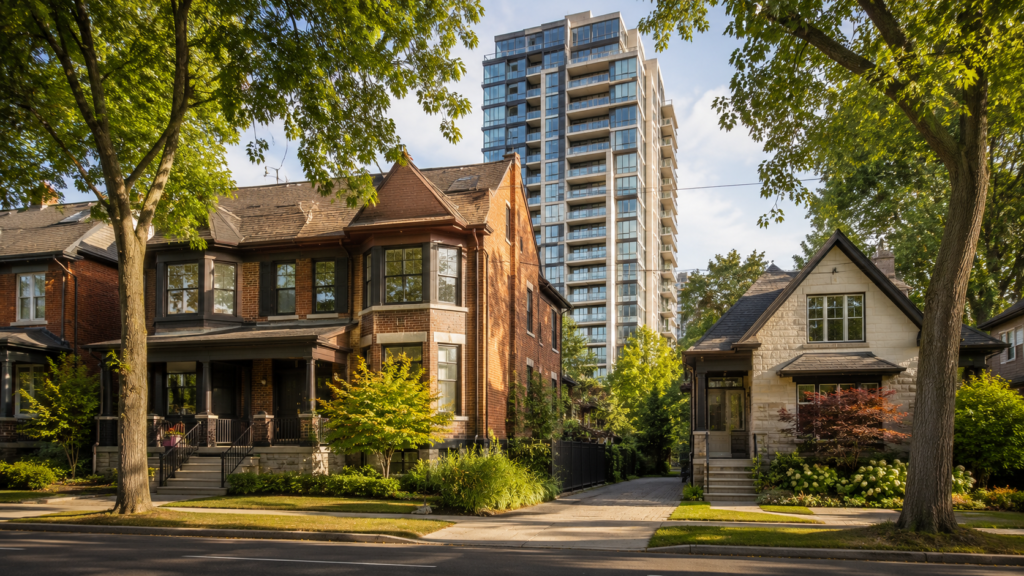
A semi-detached home usually gives you more land and more resale flexibility than a townhouse, but you share one wall and lot sizes vary block by block. The semi-detached market has held fairly steady this year, which makes it a reasonable middle step for move-up buyers who want a house feel without the full detached price.
A townhouse costs less than a semi but often comes with either maintenance fees or shared walls on two sides. Detached homes give you the most privacy and land, but at nearly double the price of a condo, the carrying costs add up fast.
Location shifts the math too. A semi in the east end typically costs less than the same home type closer to downtown. Detached homes in central Toronto neighbourhoods often run well past the GTA average of about $1.36 million. City of Toronto detached sales averaged closer to $1.65 million in June, so widening your search into the wider GTA often opens more options than switching home types alone.
What usually decides whether the move-up math works
When I walk buyers through a move-up plan, these are the items that matter more than the headline price on a listing:
- Your equity after selling costs: agent fees, legal fees, and any mortgage payout reduce what you actually take to the next purchase
- The payment gap, not just the price gap: moving from a $631,000 condo to a $1.04 million semi means a bigger mortgage and a higher qualifying rate under the stress test
- Land transfer tax: both the municipal and provincial portions rise with purchase price, so the tax on a semi is meaningfully higher than on your current condo
- Closing and moving costs: legal fees, movers, and repairs on the new home add thousands on top of the price difference
- Property type and condo fees: lenders treat maintenance fees as part of your housing cost, which matters if you are leaving a low-fee building for a different setup
- Buy-before-you-sell timing: a home equity line of credit can sometimes bridge the gap, but only if your lender approves it early
Get pre-approved before you tour homes seriously. Knowing your approved purchase price saves a lot of disappointment after you have already pictured yourself in a particular neighbourhood.
Why mortgage rates still shape the move-up decision
Rates are lower than their 2024 peak, but they are still higher than what many move-up buyers locked in when they bought their first place. Trading up is not just about how much your home gained. It is about what the new payment looks like today.
This is where a lot of plans stall. Buyers know their condo has equity, but they have not calculated the monthly cost of the semi they want at current rates. If your current home is mortgage free or close to it, the jump in carrying costs can feel sharper than you expected.
Do not forget that land transfer tax on a $1.04 million semi is a real line item, not a rounding error. Add legal fees, moving costs, and any work the new home needs, and the true cost of moving up is more than the difference between the two listing prices.
Move-Up Buyer Toronto 2026: wait or act now
There is no perfect month to move up, but a few market signals are worth watching. Overall GTA home sales have been recovering gradually, which means more competition for well-priced semis and townhouses in popular neighbourhoods.
If you wait for prices to drop before moving up, your own home’s value likely drops too. The gap between your condo and the semi you want does not always shrink when the market cools. Semi-detached and detached prices have held steadier than condos in parts of Toronto this year, so waiting can widen the gap instead of closing it.
My honest take: if your household income and equity support the new payment comfortably, and you plan to stay in the next home for at least five years, timing the exact bottom matters less than running the numbers honestly today.
Final Thoughts
Moving up in Toronto comes down to real math, not just browsing bigger listings on your phone. Look at what a semi-detached or townhouse actually costs against your current equity, get pre-approved so you know your true budget, and decide whether the lifestyle upgrade is worth the payment increase.
There is no wrong answer between condo, townhouse, semi, and detached. There is just the answer that fits your finances and your plans for the next several years. Run the numbers first, then choose the home type that your budget can actually support.