
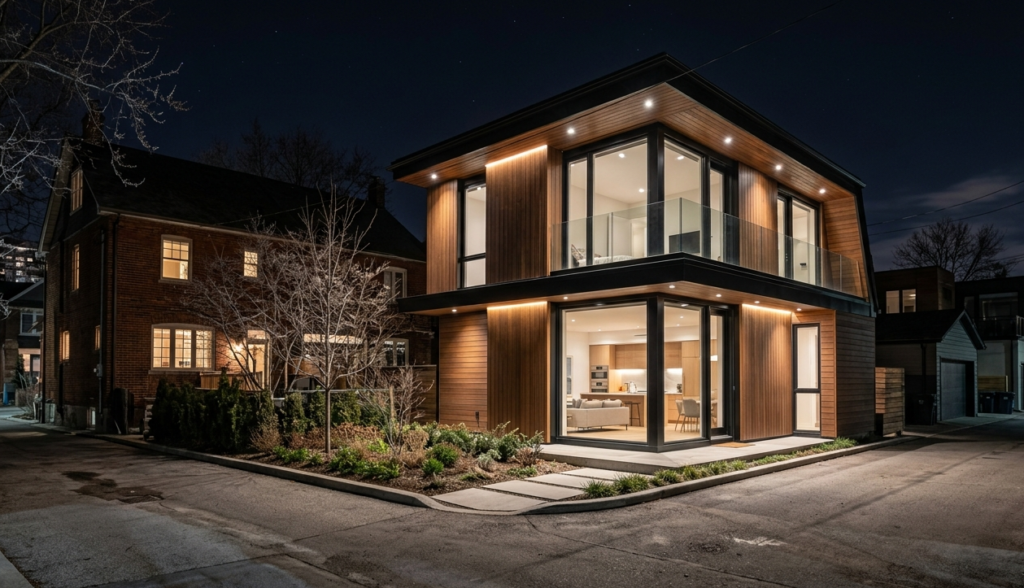
The evolution of the urban backyard has reached a transformative stage with the surge in Toronto laneway house investment. For over three and a half decades, the collective industry insight has viewed the traditional Toronto lot as a single-family asset. However, the current reality of Toronto laneway house investment is one of densification, as homeowners look to unlock the “hidden value” of their land to combat rising carrying costs.
In the current environment, a Toronto laneway house investment is being hailed as a primary solution to the city’s rental shortage. With the city’s “Changing Lanes” policy now firmly established, thousands of property owners are exploring the possibility of building a secondary detached dwelling. This shift has created a new asset class within the freehold market, promising a steady stream of rental income in a high-demand city.
From an insider perspective, laneway house investment is a “double-edged sword.” While the rental potential is undeniable, the capital required and the impact on future resale value are often misunderstood. Building a laneway house is a complex construction project that requires a sophisticated understanding of zoning, financing, and long-term property management. Let us examine the data behind this trend and what it means for your real estate portfolio this year.
The Financial Math of Toronto Laneway House Investment
The primary driver behind Toronto laneway house investment is the search for “mortgage helpers.” With average rents for a two-bedroom laneway suite in the downtown core now exceeding 3,500 dollars per month, the income can significantly offset the costs of a primary mortgage. For many Toronto families, this income is the difference between staying in the city and being forced to move to the suburbs.
However, the cost of a laneway house has also risen. In 2026, a high-quality, two-storey laneway house can cost anywhere from 450,000 to 600,000 dollars to design and build. When you factor in the current interest rates for construction financing, the “payback period” for the investment can be fifteen to twenty years. This is a long-term play that requires a patient approach to capital appreciation.
Furthermore, a Toronto laneway house investment is benefitting from new federal refinancing rules that allow homeowners to access up to 90 percent of their property’s value for secondary suite construction. This has made the “math” more accessible for those with existing equity, but it also means taking on a significant amount of new debt in an uncertain economic climate.
The Resale Reality: Does a Laneway House Add Value?
A common misconception in the laneway house investment landscape is that every dollar spent on construction translates directly into a dollar of increased property value. In reality, the “appraisal gap” is a significant concern. While a laneway house adds massive utility and income, some buyers in the resale market may actually prefer a traditional backyard over a second dwelling that takes up the entire lot.
In the Toronto laneway house investment context, the value added is often “income-based” rather than “comparable-based.” An appraiser will look at the rental income the suite generates, but a future buyer who wants a large garden for their children might see the laneway house as a drawback. This “niche” appeal means that while your property is more valuable to an investor, it may be less attractive to a traditional family buyer.
From an insider perspective, the most successful laneway house investment projects are those that prioritize “flexibility.” Designing a suite that can serve as a rental now, but could be used as an “in-law suite” or a home office later, ensures that the property appeals to the widest possible range of future buyers. The goal is to add a “feature,” not a “burden,” to the primary residence.
7 Critical Hurdles for Toronto Laneway House Investment 2026
Navigating the path to a successful secondary suite requires more than just a contractor and a dream. The laneway house environment is heavily regulated and technically demanding. Here are the primary hurdles you must clear before breaking ground:
- Zoning Bylaw Compliance: Your lot must meet specific requirements for width, depth, and “soft landscaping” to qualify for a laneway house or garden suite.
- Emergency Access: The “fire access” path from the street to the laneway house must be at least 0.9 to 1.0 metres wide, which is a common deal-breaker for narrow Toronto lots.
- Utility Connections: Running water, sewer, and electricity lines from the main house to the backyard can be one of the most expensive and invasive parts of the project.
- Construction Financing: Traditional mortgages often don’t cover “ground-up” construction in the backyard, requiring specialized loan products or HELOCs.
- Tree Protection: Toronto’s strict private tree bylaws can prevent construction if a “significant” tree or its root system is located within the building footprint.
- Tenant Management: Becoming a landlord in your own backyard requires a different mindset and a thorough understanding of the Residential Tenancies Act.
- Property Tax Impact: Adding a second dwelling will trigger a reassessment of your property value, leading to higher annual property taxes.
It is also worth noting that Toronto laneway house investment is seeing a surge in “pre-fabricated” and “modular” options. These can reduce construction time and noise in the neighbourhood, but they still require the same foundation work and utility connections as a traditional build.
Neighbourhood Spotlights: Where Laneway Houses are Thriving
The laneway house investment trend is most visible in the “old city” neighbourhoods with established laneway networks. Areas like Little Italy, Leslieville, and the Annex are the epicentres of this movement. These neighbourhoods have the “laneway culture” and the high rental demand needed to make the investment viable.
In the West End, laneway house investment is taking off in Roncesvalles and Bloordale. These areas have many deep lots that can easily accommodate a garden suite without sacrificing the entire backyard. The proximity to transit and local amenities makes these suites highly desirable for professional tenants who want a unique living space.
Further north, laneway house investment is expanding into “Garden Suites” in areas like North York and East York. Since these lots often don’t have a formal laneway, the city’s new “Garden Suite” bylaws allow for a detached house in the backyard that is accessed via a side path. This has opened up thousands of new properties for potential densification this year.
The Long-Term Strategy for Multi-Generational Living
Beyond the rental income, a Toronto laneway house investment is increasingly being used for “multi-generational” living. Many families build a laneway house for aging parents to “downsize” into, allowing them to stay close to their grandchildren while the adult children take over the main house. This “family-first” approach is a powerful way to keep families together in an expensive city.
In over three and a half decades of observing these market shifts, the most successful real estate moves are those that solve a “life problem.” A laneway house investment is a perfect example of this. It solves the problem of affordability, the problem of housing supply, and the problem of elder care, all within the footprint of a single Toronto lot.
The key to a successful Toronto laneway house is to view it as a “legacy project.” It is not a “get rich quick” scheme. It is a significant capital commitment that will change the way you live and the way your property is valued for decades to come. Doing it right requires the right team of architects, builders, and real estate advisors who understand the “Insider” nuances of the Toronto market.
Final Thoughts
A Toronto laneway house investment is a bold and innovative response to the challenges of modern urban living. While it is not for everyone, for the right property and the right owner, it can be a transformative financial and lifestyle move.
It is a time for careful planning and realistic expectations. A laneway house offers a unique way to participate in the city’s growth, but it requires a disciplined approach to both construction and long-term property management.
If you are wondering if your lot qualifies for a laneway house or if you want to see how a backyard suite would affect your “Black Book” property valuation, let us connect. I would be happy to bring a fresh cup of coffee to your home and walk you through the zoning and financial math to ensure you are making an “Insider” move.