
The evolution of the Toronto housing landscape has reached a fascinating turning point with the rise of the Toronto semi-detached market 2026. For over three and a half decades, the industry has often focused on the two extremes of the market: the high-rise condo towers and the sprawling detached estates. However, the current economic climate has shifted the spotlight toward the “missing middle,” making semi-detached homes the most resilient and sought-after asset class in the city.
In the current environment, the Toronto semi-detached market 2026 represents the perfect intersection of value, space, and urban lifestyle. As detached home prices remain out of reach for many, and the condo sector faces an inventory surplus, the semi-detached home has emerged as the ultimate compromise for growing families and savvy investors alike.
From an insider perspective, the strength of the Toronto semi-detached market 2026 is not a fluke; it is a structural response to a city that is maturing. Buyers are increasingly prioritizing freehold ownership and private outdoor space without the two-million-dollar price tag often associated with fully detached properties. Let us examine the data behind this surge and what it means for your real estate strategy this year.
The Resilience of the Toronto Semi-Detached Market 2026
The Toronto semi-detached market 2026 has shown remarkable stability compared to other segments of the GTA. While some condo pockets have seen price corrections and detached homes have experienced longer days on market, semi-detached properties continue to move quickly. This resilience is driven by a chronic undersupply of this specific housing type in desirable urban pockets like Leslieville, High Park, and Danforth.
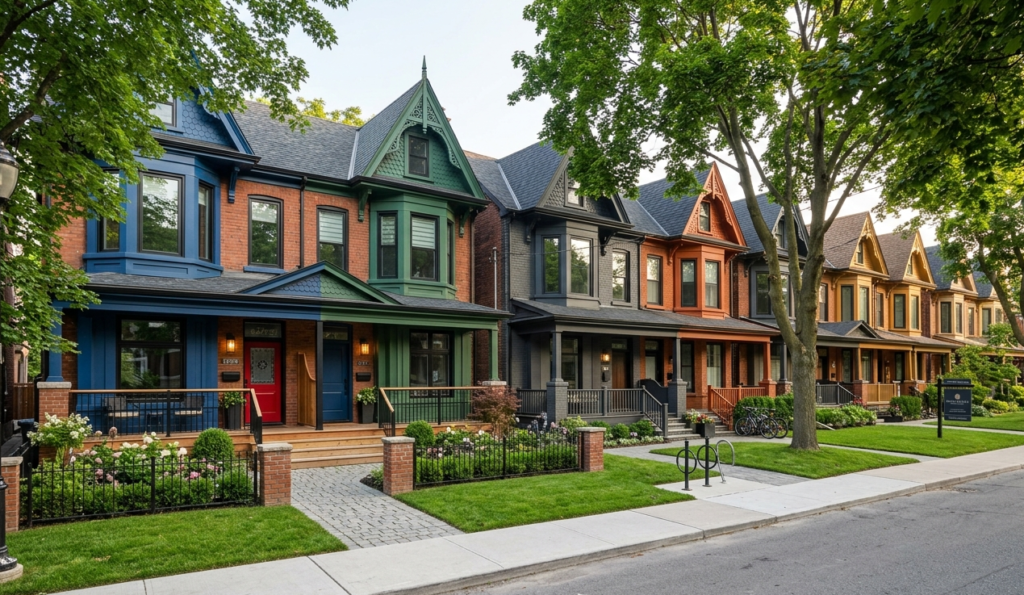
The “missing middle” refers to housing that is more dense than a single-family home but more spacious than a high-rise apartment. In the Toronto semi-detached market 2026, these homes provide the “best of both worlds” – a private entrance, a backyard for the kids or pets, and the ability to build equity in a freehold structure rather than paying monthly condo fees that can fluctuate over time.
This segment is currently the most balanced part of the market, with a sales-to-new-listings ratio that remains healthy even as other sectors soften. For buyers, the Toronto semi-detached market 2026 offers a sense of security; these homes historically hold their value exceptionally well during market shifts because the demand from young families is constant and predictable.
Why Move-Up Buyers are Flocking to Semis and Towns
The primary engine driving the Toronto semi-detached market 2026 is the “move-up” buyer. These are individuals and couples who bought a one- or two-bedroom condo five to seven years ago and are now looking for more room to grow. With the recent expansion of the insured mortgage cap to 1.5 million dollars, a semi-detached home in a solid Toronto neighbourhood is now a realistic next step.
In the Toronto semi-detached market 2026, a well-maintained semi-detached home often provides 1,500 to 2,000 square feet of living space, which is double the size of a typical modern condo. This extra square footage allows for a home office, a third bedroom, or a finished basement—features that have become non-negotiable in the post-pandemic world.
Furthermore, the financial math of the Toronto semi-detached market 2026 is compelling. When you factor in the elimination of 800 to 1,200 dollars in monthly condo fees, a buyer can often carry a significantly larger mortgage for a semi-detached home for the same “all-in” monthly cost as a luxury condo. This “hidden affordability” is a key reason why the missing middle is winning the race in 2026.
7 Reasons the Toronto Semi-Detached Market 2026 is the Top Choice
Understanding why this specific segment is outperforming the rest of the city requires a look at the unique benefits these homes offer. Whether you are a first-time buyer or a move-up family, here are the primary drivers behind the Toronto semi-detached market 2026:
- Freehold Ownership: You own the land and the structure, giving you full control over renovations, maintenance, and long-term improvements without board approval.
- Private Outdoor Space: The value of a private backyard or deck has never been higher, providing a sanctuary within the city limits.
- Lower Monthly Carrying Costs: The absence of high monthly maintenance fees makes the long-term financial outlook more predictable for homeowners.
- Neighbourhood Character: Most semi-detached homes are located in established, walkable neighbourhoods with mature trees, local schools, and vibrant main streets.
- Renovation Potential: These homes offer the ability to “add value” through cosmetic updates or structural additions, which is much harder to do in a condo.
- Strong Resale Demand: Because they appeal to the largest segment of the buying public (young families), semi-detached homes are consistently the easiest properties to sell.
- Rental Income Potential: Many semi-detached homes in Toronto feature separate basement entrances, allowing for a “mortgage helper” suite to offset carrying costs.
It is also worth noting that the Toronto semi-detached market 2026 is benefitting from a shift in buyer psychology. People are looking for “forever homes” rather than “starter homes,” and a semi-detached property in a good school district fits that description perfectly for many GTA residents.
Neighbourhood Spotlights: Where the Action is Happening
The Toronto semi-detached market 2026 is not uniform across the city; certain pockets are seeing more intensity than others. In the East End, areas like Riverdale and the Pocket continue to see multiple offers for turnkey semis. These neighbourhoods offer a sense of community and proximity to downtown that is hard to replicate elsewhere.
In the West End, the Toronto semi-detached market 2026 is thriving in Junction Triangle and Wallace-Emerson. These areas have seen significant infrastructure improvements and new local businesses, making them a magnet for young professionals who want a freehold home in a “cool” part of town. The price point in these areas often falls right into the sweet spot for insured mortgages.
Further north, the Toronto semi-detached market 2026 is seeing a surge in North York and parts of Etobicoke. Here, you can often find slightly larger lots and more modern layouts compared to the century homes of the downtown core. For families who need to commute or want more suburban-style amenities while keeping a Toronto address, these pockets are the place to watch this year.
The Investment Case for the Missing Middle in 2026
From an investment perspective, the Toronto semi-detached market 2026 offers a level of safety that is hard to find in the more volatile condo sector. While condos are subject to massive swings in supply as new towers are completed, the supply of semi-detached homes is essentially fixed. Very few new semi-detached homes are being built in the urban core, making the existing stock a finite and valuable resource.
Investors in the Toronto semi-detached market 2026 are also seeing strong rental demand. A three-bedroom semi-detached home in a good neighbourhood can command premium rents from stable, long-term tenants who want a “house” experience but aren’t ready to buy. This makes the “buy and hold” strategy very attractive for those looking to build generational wealth through real estate.
In over three decades of observing these market cycles, the most consistent performers are always the homes that people actually want to live in for the long term. The Toronto semi-detached market 2026 is the physical embodiment of that demand. It is the housing type that bridges the gap between urban density and suburban comfort, and its dominance in 2026 is a reflection of a city that is finally valuing its “missing middle.”
Final Thoughts
The Toronto semi-detached market 2026 is more than just a real estate trend; it is a fundamental shift in how we define the “ideal” Toronto home. By offering a balance of freehold ownership, functional space, and neighbourhood charm, these homes have become the anchor of the modern GTA market.
It is a reminder that in a complex and often confusing real estate environment, the most straightforward path is often the best. The Toronto semi-detached market 2026 provides a clear and stable option for those looking to secure their future in one of the world’s most desirable cities.
If you are wondering how the Toronto semi-detached market 2026 affects your specific buying power, or if you want to see how much equity you have built in your current home, let us connect. I would be happy to bring a fresh cup of coffee to your home and walk you through a Black Book valuation to ensure you are positioned to make the most of this “missing middle” surge.